
Fascial Bodywork & Acupuncture: Two Maps, One Body
How Rolfing® Structural Integration and Acupuncture Work Together
At our Playa Vista practice, we believe lasting change happens when we support both the body's structure and its ability to adapt, recover, and regulate itself.
Rolfing® Structural Integration and Acupuncture come from different traditions, yet both recognize that the body functions as an interconnected whole. While Rolfing® focuses on fascia, structural alignment, and movement optimization, Acupuncture focuses on regulation, circulation, and restoring internal balance.
Together, they create an integrated care model that supports long-term wellness through a whole-body approach to pain, recovery, and performance.
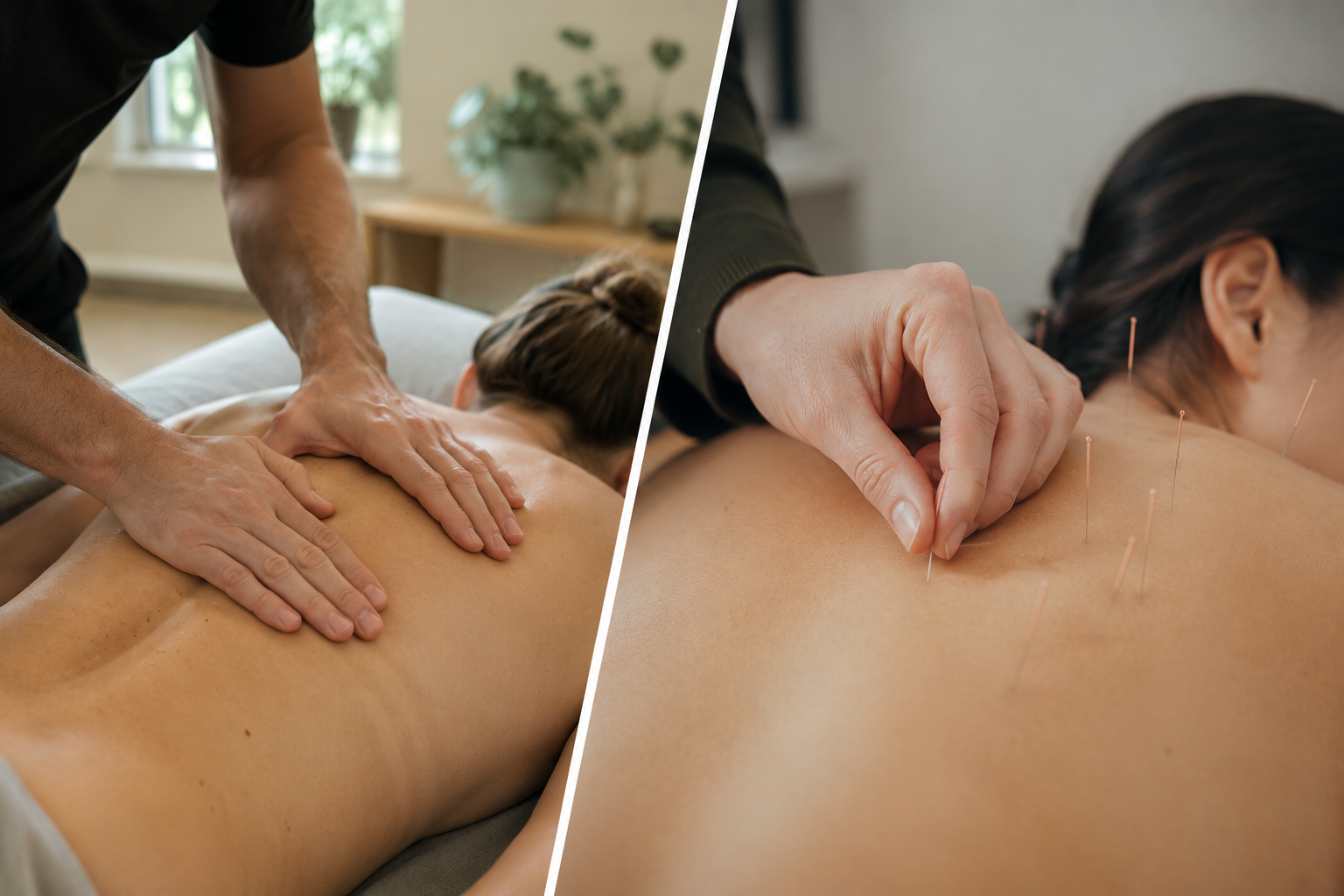
Understanding the Body Through Two Complementary Perspectives
Rolfing® Structural Integration and Acupuncture use different frameworks, but both recognize that the body functions as an interconnected whole.
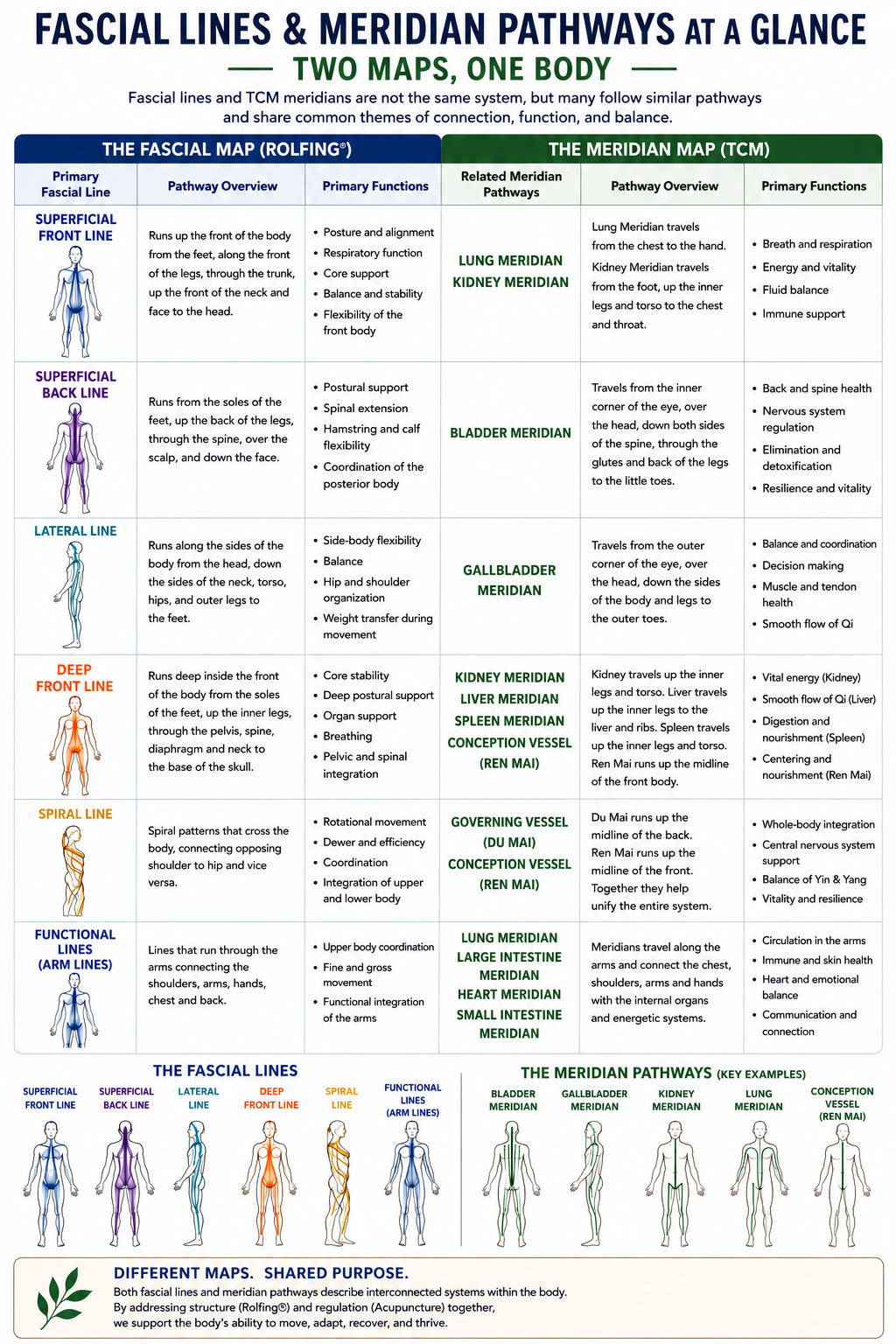
The Fascial Map (Rolfing) focuses on fascia, structural alignment, posture, movement efficiency, and how the body organizes itself in relation to gravity.
The Meridian Map (Acupuncture) focuses on regulation, circulation, recovery, internal balance, and nervous system support through the body's interconnected meridian pathways.
While these systems come from different traditions, they often share a common goal: helping the body function more efficiently as a whole.
Together, both approaches aim to support:
Better movement and posture
Reduced strain and tension
Enhanced recovery
Improved resilience and adaptability
Greater overall well-being
How Acupuncture Supports the Rolfing® 10-Series
The Rolfing® 10-Series is designed to systematically improve structural relationships throughout the body. As fascia-focused bodywork creates change, Acupuncture can help support the body's ability to recover and integrate those changes.
Sessions 1–3: Breath, Foundation & Balance
The early sessions focus on breathing mechanics, rib cage mobility, the feet, lower legs, and side-body organization.
Acupuncture may help support:
Nervous system regulation
Breath and fascia connection
Diaphragm release therapy goals
Circulation and recovery
Adaptation to new movement patterns
Sessions 4–7: Core Support, Spine, Neck & Jaw
These sessions address deeper structural relationships involving the pelvic floor, psoas, spine, neck, and jaw.
Acupuncture may help support:
Jaw tension relief
Bruxism treatment and sleep-related bruxism patterns
TMJ therapy Los Angeles treatment goals
Neck and shoulder tension relief
Upper cervical tension relief
Recovery from structural changes
For clients dealing with chronic stress posture, stress-related tension patterns, or a persistent fight or flight response, combining Acupuncture with Rolfing® can provide a powerful collaborative healthcare approach.
Sessions 8–10: Whole-Body Integration
The final sessions focus on movement efficiency, coordination, and integration of the entire body.
Acupuncture may help support:
Performance recovery therapy
Athletic performance therapy goals
Sports recovery bodywork outcomes
Improved adaptability and resilience
Long-term maintenance of structural improvements
Our Philosophy at Playa Rolfing and Body Therapies
Our approach is built around three interconnected pillars:
1. Build
Supporting structure through:
Rolfing® Structural Integration
Fascial Bodywork
Integrative Manual Therapy
Structural Assessment
2. Restore
Supporting recovery through:
Acupuncture
Craniosacral Therapy Los Angeles
Nervous System Regulation
Lymphatic Support
3. INTEGRATE
Supporting long-term function through:
Movement-based rehabilitation
Strength Training
Corrective Exercise
Lifestyle Coaching
A Collaborative Approach to Lasting Change in Playa Vista
No single therapy does everything.
Structural changes often require support from the nervous system. Likewise, recovery-focused therapies are often more effective when the body is organized through efficient movement and structural alignment.
By combining the strengths of Rolfing® Structural Integration and Acupuncture, our team creates an evidence-informed bodywork approach that addresses both structure and function. Whether you're seeking relief from chronic tension, support for athletic performance, posture correction, or a more complete root-cause bodywork approach, these therapies can work together to help create lasting change.
If you're looking for Rolfing, Acupuncture, or an integrated approach to wellness in Playa Vista, we offer collaborative care at Playa Rolfing and Body Therapies designed to help you move better, recover more effectively, and feel your best.
Ready to get started? Use the links below to schedule your initial session or explore our full range of therapies.
Frequently Asked Questions
Can I receive Acupuncture and Rolfing® at the same time?
Yes. Many clients choose to combine Acupuncture and Rolfing® Structural Integration as part of an integrated care model. While Rolfing® focuses on fascia, posture, and structural alignment, Acupuncture can help support recovery, nervous system regulation, and the body's adaptation to change.
Do I need to complete the full Rolfing® 10-Series before trying Acupuncture?
Not at all. Acupuncture can complement any stage of the Rolfing® process, whether you're beginning the 10-Series, in the middle of treatment, or simply seeking support between sessions.
What conditions can benefit from this combined approach?
Clients often seek care for neck and shoulder tension, jaw tension, TMJ-related discomfort, low back pain, sciatica, stress-related tension patterns, breathing restrictions, athletic recovery, and postural imbalances. Every treatment plan is customized to the individual.
How does Acupuncture support Fascial Bodywork?
As structural changes occur through Fascial Bodywork and Rolfing®, Acupuncture may help support circulation, recovery, relaxation, and nervous system balance. Together, they help the body adapt more comfortably and efficiently to change.
Is this approach only for people experiencing pain?
No. Many clients pursue Rolfing® and Acupuncture to improve movement efficiency, athletic performance, injury prevention, posture, stress management, and overall well-being, even when they are not experiencing significant pain.
Quick Summary
Rolfing® Structural Integration and Acupuncture use different maps of the body, but both focus on improving whole-body function rather than treating isolated symptoms.
Rolfing® works primarily through fascia, posture, structural alignment, and movement optimization, while Acupuncture supports regulation, recovery, circulation, and nervous system balance.
The Rolfing® 10-Series systematically addresses different structural relationships throughout the body, and Acupuncture can help support adaptation and recovery during each phase.
Combining Fascial Bodywork and Acupuncture may help improve movement efficiency, reduce tension patterns, enhance recovery, and support long-term resilience.
At Whole Bodyworks Collective, we use a collaborative approach that integrates structure, movement, and recovery to help create lasting change and overall well-being.
