
And How Integrative Bodywork Can Support Lasting Relief

What I Learned from Advanced Training (and What It Means for You)
A couple of weeks ago, I attended an advanced training focused on the front of the neck and the base of the skull. These areas most people don’t think about, but often play a major role in tension, breathing mechanics, and how you feel in your body. As a practicing therapist in Playa Vista working with fascia-focused bodywork and structural integration, what stood out most wasn’t just anatomy, it was a deeper reminder that:
The body doesn’t work in isolated parts. Everything is connected.
And when something feels “stuck,” tight, or not quite right…
…it’s often coming from somewhere you wouldn’t expect.
Why Your Neck Is So Important
When clients come in, they often point to:
Jaw tension
Neck tightness
Headaches
Trouble taking a full breath
A feeling of pressure or restriction
Most assume the issue is right where they feel it.
But the front of the neck is actually a central intersection point between:
Your breathing system
Your nervous system
Your digestive system
Your circulation and lymph flow
There’s a continuous fascial line of connection that runs from your diaphragm (your main breathing muscle) all the way into your neck and skull.
So if something is off below…
…it often shows up above.
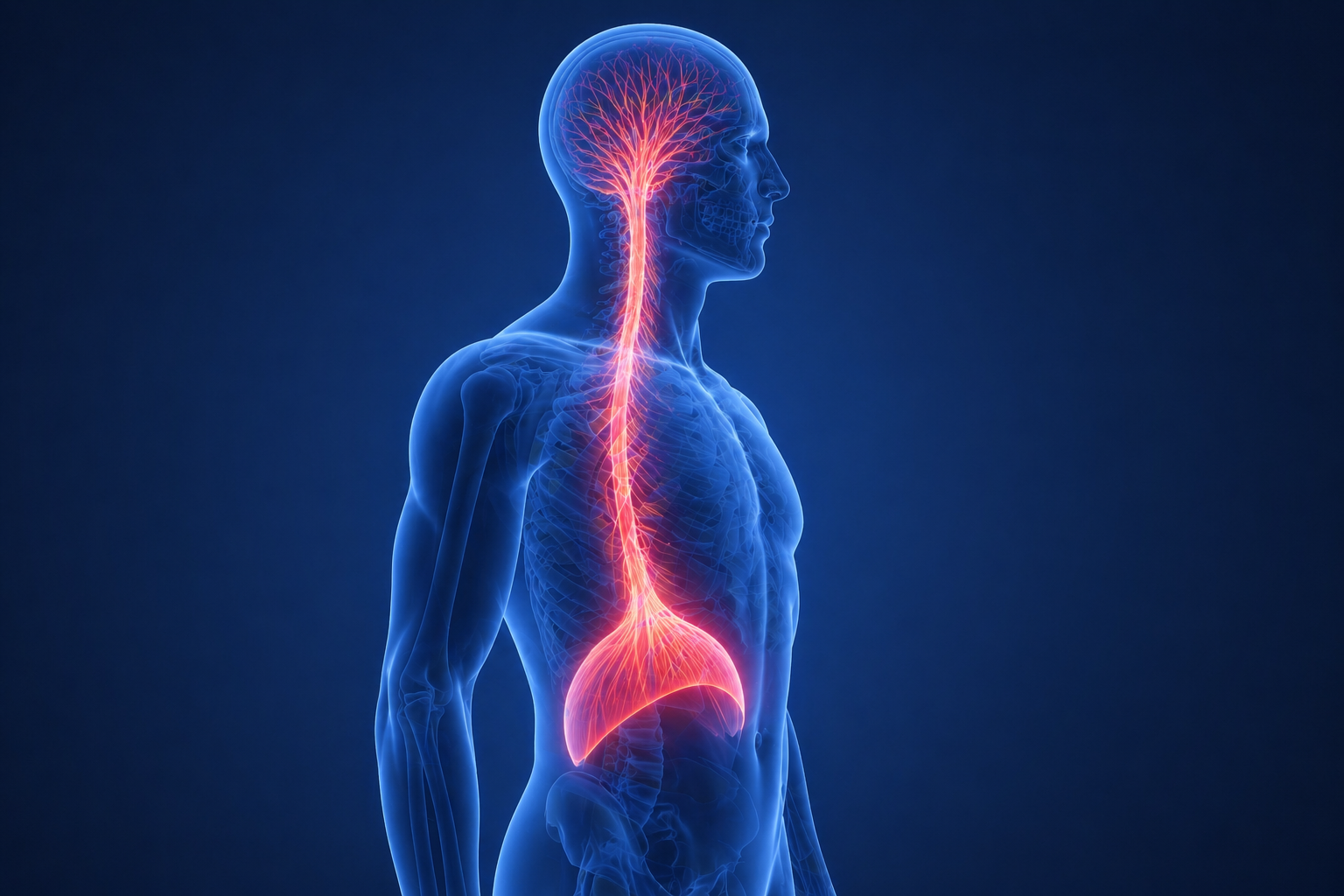
The diaphragm is part of a continuous fascial line of connection that extends upward through the neck and into the head and skull, influencing breathing mechanics and tension patterns in the jaw and face.
Why Breathing Matters More Than You Might Realize
One of the biggest takeaways from this training:
Many issues in the neck and jaw may relate not only to breathing mechanics, but also to stress-related tension patterns and nervous system regulation.
If the diaphragm becomes tight or restricted over time (which is very common with stress, posture, or lifestyle), it can:
Pull downward on the structures of the chest and neck
Limit how your ribcage expands
Create pressure that travels upward into the neck and head
Reduce circulation and fluid movement
This can lead to that feeling of:
Tightness that keeps coming back
Shallow breathing
Tension that doesn’t fully release
The “Hidden” Structure That Affects Jaw, Tongue, and Throat
There’s a small bone in your neck called the hyoid. Most people have never heard of it, but it plays an important role in breathing mechanics, jaw function, tongue movement, and even voice.
Because of its fascial relationships, restrictions in this area can show up as:
Jaw tension or clenching
Throat tightness
Changes in breathing depth
Difficulty fully relaxing the neck
Sometimes this is also experienced as a subtle feeling of “something stuck in the throat,” which often reflects deeper tension patterns in the system.
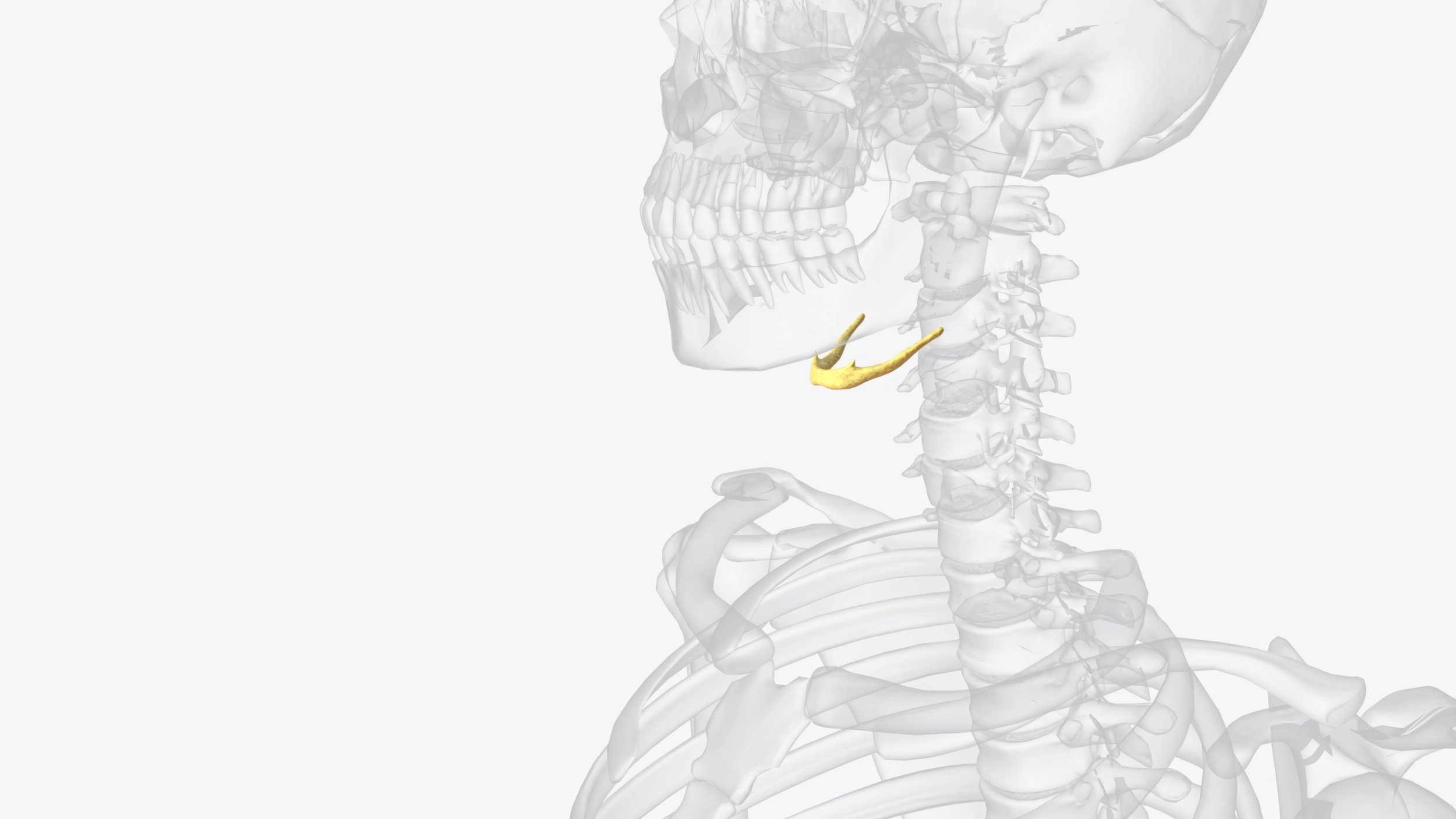
The hyoid bone is a small floating structure in the neck that supports tongue movement, swallowing, speech, and plays a key role in coordinating breathing and jaw function through its muscular and fascial connections.
Why Working Only on the Neck Doesn’t Always Fix the Problem
What feels like a neck issue is often coming from somewhere else.
For example:
Breathing restrictions can affect the base of the skull
Posture and ribcage position can change how the neck functions
Digestive tension can create upward pull into the throat
This is where Rolfing Structural Integration and integrative manual therapy can help address the root pattern rather than only the symptom.
So if we only focus on the area that hurts, we may miss the bigger picture.
That’s why in sessions, I often work beyond just the neck or jaw and look at how your whole body is organizing itself.
What This Means for Your Sessions
When you come in, the goal isn’t just to “release tension.”
It’s to understand:
Where your body is holding structural and fascial patterns
How those patterns are connected
What needs to shift for your system to function more efficiently
This whole-body approach often supports movement optimization and more efficient organization through the nervous system.
This might include working with:
Breath and ribcage movement
The front of the body, not just the back
Subtle areas like the throat, chest, and diaphragm
Global movement patterns
The goal is not to force change, but to help your body let go of what it no longer needs to hold.
Why This Work Feels Different
This approach often feels different from traditional massage because it goes beyond muscles alone.
It works with:
Fascia (connective tissue)
Movement patterns
Fluid dynamics (circulation, lymph)
Nervous system regulation
Structural relationships throughout the body
Changes can feel subtle at first, but tend to be more integrated and longer lasting.
Why I Continue to Learn (And Always Will)
Every time I attend a workshop like this, I’m reminded:
The more you learn about the body, the more you realize how interconnected everything truly is.
These experiences don’t just add techniques, they change how I see patterns in the body and how I support clients in addressing them.
Looking for Fascia-Focused Bodywork in Los Angeles?
If you’re in Los Angeles and dealing with ongoing neck, jaw, or breathing-related tension that hasn’t fully resolved, this kind of whole-body, fascia-focused approach may be worth exploring.
I offer sessions in Manhattan Beach, Playa Vista, and Santa Monica, supporting clients through integrative bodywork, structural integration, and nervous system-focused care designed to address patterns at their root—not just symptoms.
Who This Is For
This work may be especially supportive if you experience:
Jaw tension or clenching
Neck and shoulder tightness that keeps returning
Shallow or restricted breathing
TMJ-related discomfort
Stress-related posture patterns
A sense that things don’t fully resolve with surface-level treatment
Frequently Asked Questions
Q; Why do my neck and jaw tension keep coming back?
A: Because these areas are often influenced by deeper patterns in breathing mechanics, posture, fascia, and nervous system regulation—not just local muscle tension.
Q: Can breathing really affect jaw and neck pain?
A: Yes. Restricted diaphragm function and shallow breathing can create upward tension patterns that affect the neck, jaw, and head.
Q: What is the hyoid bone and why does it matter?
A: The hyoid bone is a small structure in the neck that supports swallowing, speech, and jaw function, and is closely connected to breathing and tongue mechanics.
Q: Is this approach different from traditional massage?
A: Yes. This work focuses on fascia, structural integration, and nervous system regulation rather than only treating muscles in isolation.
Q: Can this help with TMJ or jaw clenching?
A: Many people with TMJ symptoms or jaw clenching patterns find relief when addressing the broader system, including breath, posture, and fascial connections.
Quick Summary
The neck, jaw, and breathing system are deeply connected through fascial and muscular relationships
The diaphragm plays a key role in how tension is distributed through the neck, jaw, and head
Breathing mechanics can significantly influence jaw tension, posture, and nervous system regulation
The hyoid bone helps coordinate swallowing, speech, breathing, and jaw function
Lasting change often comes from working with the whole-body system, not just the area of discomfort
