
A Fresh Look at Jaw Release | By Natania Goldberg, Certified Rolfer® and Licensed Massage Therapist in Los Angeles

Have you ever caught yourself clenching your teeth, only to notice that your temples, neck, and shoulders feel tight, too? That’s one reason I look beyond the jaw itself during a Jaw Release session. The muscles that move your jaw connect to different parts of your skull, while the tissues beneath your chin are closely related to the structures of your neck. There’s a lot happening in this relatively small area!
I recently attended CranioSacral Therapy 2 through Upledger Institute International, continuing the training I began in New York this past August. I love learning more about these connections and bringing that understanding into my work with you. This workshop introduced me to additional ways of working around the face, cranial bones, and inside the mouth, and I’m excited to share what this may look and feel like during your sessions!
One of the most fascinating bones we explored was the sphenoid. Tucked behind your eyes at the base of your skull, it has a shape that resembles a butterfly with its wings outstretched. Take a look at its shape below. It’s remarkable to think that this intricate bone sits within your head, helping form part of the base of your skull and contributing to the structure of the eye sockets.
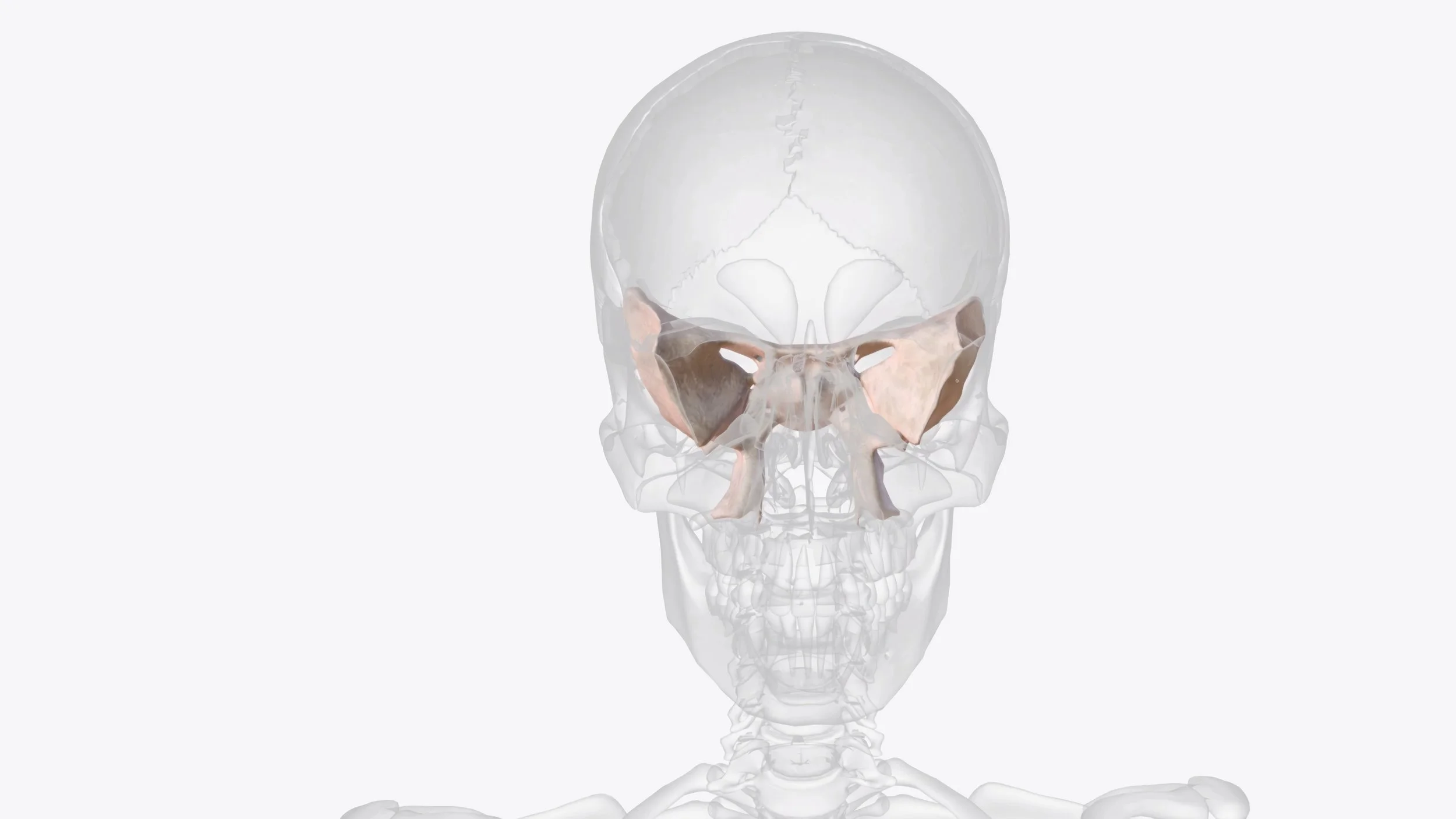
The sphenoid is one of only a few bones that directly articulate with nearly every other cranial bone, making it a central structural link within the skull.
Parts of the pterygoid muscles, which help move your jaw, attach to projections of this bone. Understanding this relationship gives me another way to appreciate how the structures involved in jaw movement connect with the rest of the skull.
Your Upper Jaw Is Also the Roof of Your Mouth
Run your tongue along the firm roof of your mouth. You’re feeling the covering over your hard palate, which separates your oral cavity from your nasal cavity.
The bones that hold your upper teeth, called the maxillae, also form the front portion of this roof. Farther back, the palatine bones complete the hard palate and articulate with the maxillae and other bones of the skull. These structures are part of a larger network of connections within your face and head.
The workshop included gentle contacts along this area, building on the muscle and fascial work I already incorporate inside the mouth. During a session, you may feel a gloved finger resting along your palate or contacting the inside of your cheek, sometimes paired with a supporting hand on the outside of your face.
This work is specific, but it doesn’t necessarily require a lot of pressure. In fact, the contact may be surprisingly light.
During my Jaw Release Session, I’m paying attention to the tissues beneath my hands, your comfort, and how your jaw feels as we reassess. Your feedback helps me decide whether to maintain a contact, change its direction, or try a different approach.
Your Jaw Meets Your Skull Near Your Ears
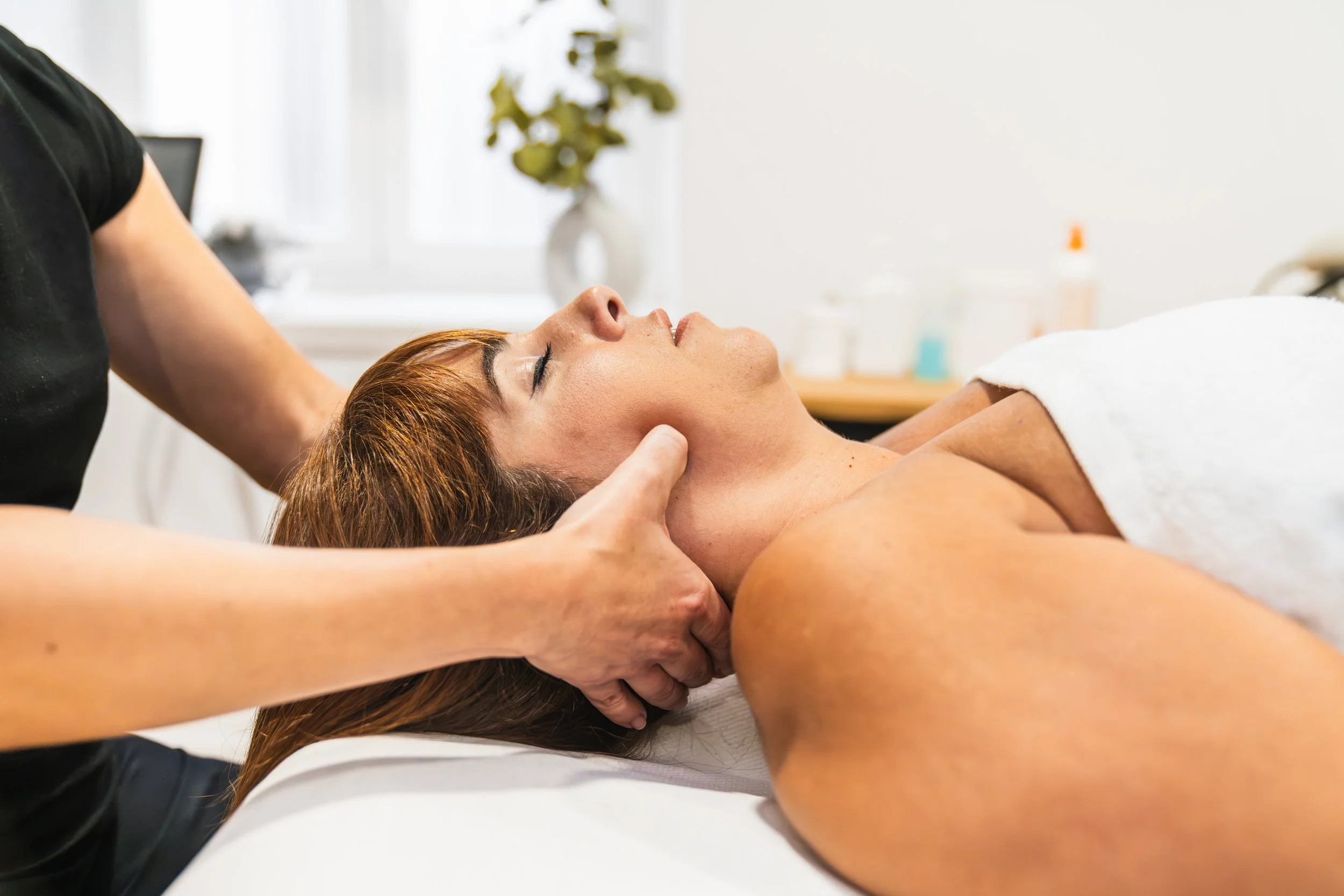
Place your fingertips just in front of your ears and slowly open and close your mouth. You can feel movement in the area of your temporomandibular joints, commonly called the TMJs. These joints are where your lower jaw, or mandible, meets the temporal bones of your skull. You have one on each side, and they work together whenever you speak, chew, yawn, or open your mouth.
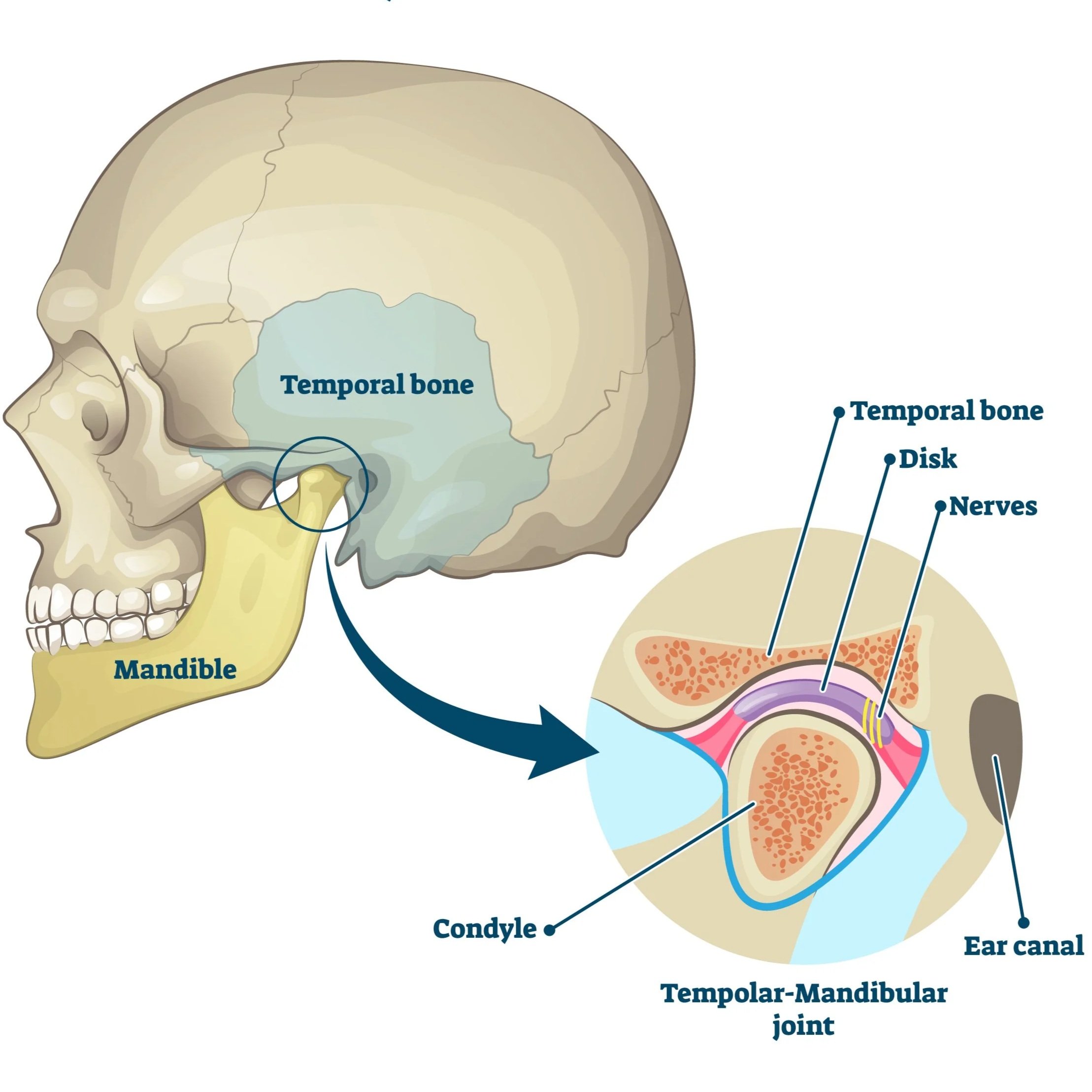
The temporomandibular joint (TMJ) connects the lower jaw to the temporal bone of the skull. You have one joint on each side.
This helps explain why my hands may move from your jaw to your temples, cheeks, or the area around your ears during a session. I’m exploring the muscles, fascia, and attachments around the structures your jaw moves against, rather than treating the jaw as an isolated part of your body.
My existing Jaw Release work includes the masseter muscles in your cheeks, the temporalis muscles at your temples, and the deeper pterygoid muscles involved in jaw movement. These muscles contribute to the different movements required for chewing and opening and closing your mouth.
The new cranial techniques give me additional options for approaching this same region. Sometimes that means more specific muscle work. At other times, it may involve a quieter, gentler contact that allows me to assess the surrounding tissues without applying much pressure.
Each session is different, and the approach depends on what I find and how you respond.
The Back of Your Head Belongs in the Picture, Too
The occiput forms the back and base of your skull. It meets the first bone of your neck, the atlas, and contains a large opening called the foramen magnum. This opening allows the brainstem to continue into the spinal cord.
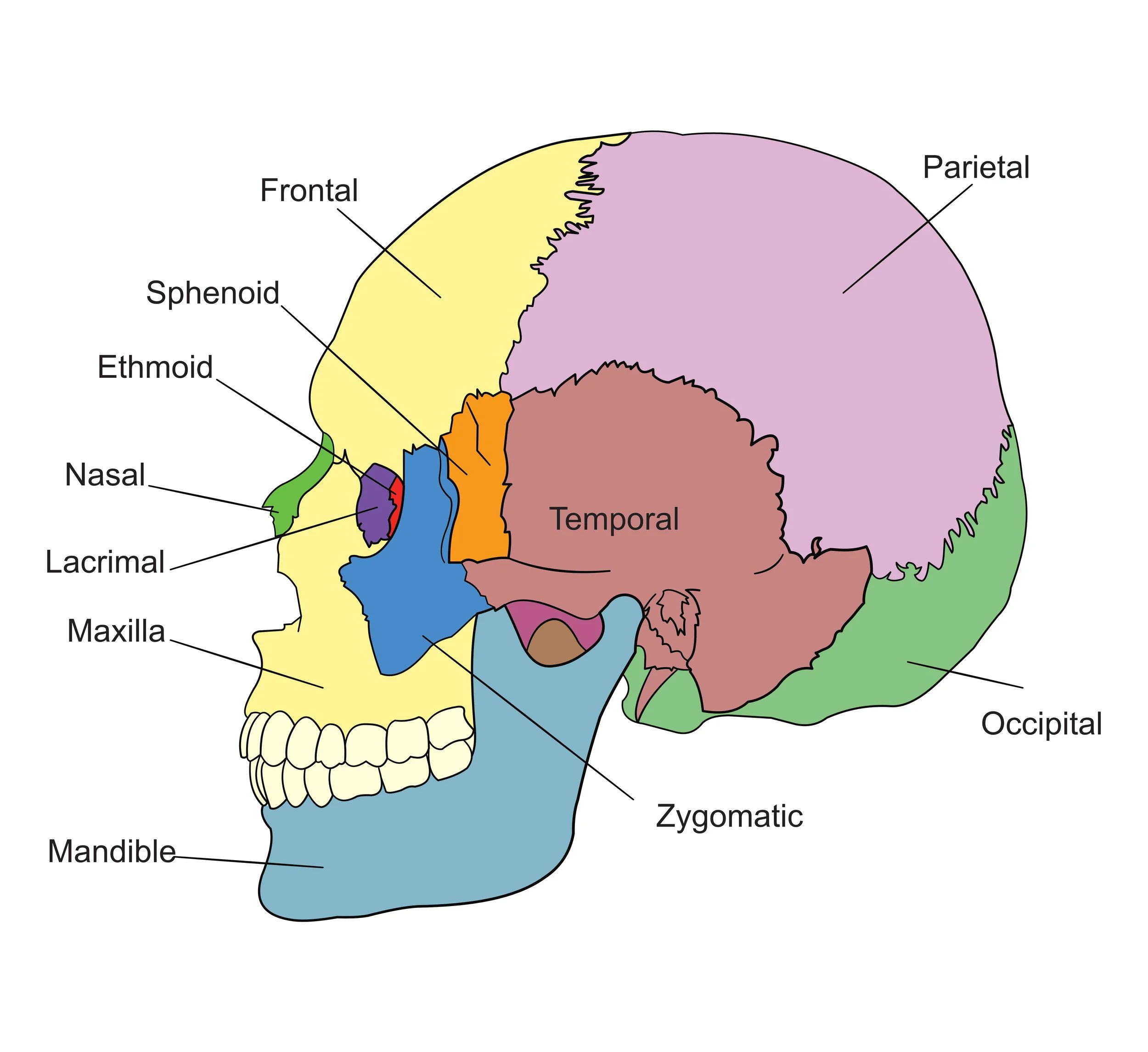
The occipital bone forms the back and base of the skull.
Deep within the skull, the sphenoid and occipital bones meet at a junction that typically fuses as we mature. Around the outside of the skull, muscles and connective tissues attach your head to your neck, helping support and coordinate its movement.
During a session, you may notice my hands supporting the base of your head for a little longer. From my structural perspective, I’m attending to the surrounding tissues and how comfortably your head, neck, and jaw work together.
This is especially relevant when someone experiences tension across several of these areas. The jaw doesn’t operate independently of the head and neck, and I want my work to reflect those relationships.
The underside of your jaw matters, too. Here, I work with the floor of the mouth, including the mylohyoid and digastric muscles, as well as the tissues around the hyoid, a small bone located in the neck beneath your jaw.
The hyoid is particularly interesting because it doesn’t form a conventional joint with another bone. Instead, it is suspended by muscles and ligaments that connect it with surrounding structures. The stylohyoid muscle and stylohyoid ligament extend toward the styloid process, a slender projection of the skull near your ear.
When you consider all of these connections, it becomes easier to understand why my approach to jaw tension may include the underside of the jaw, the front and sides of the neck, the base of the skull, and the surrounding facial structures.
Why Comfort and the Nervous System Matter
Anatomy is only part of the picture. How you experience a session matters just as much as the structures I’m working with.
The trigeminal nerve carries much of the sensation from your face, teeth, and mouth. One of its branches also supplies the primary muscles involved in chewing. This nerve therefore has important roles in both what you feel around your jaw and how you move it.
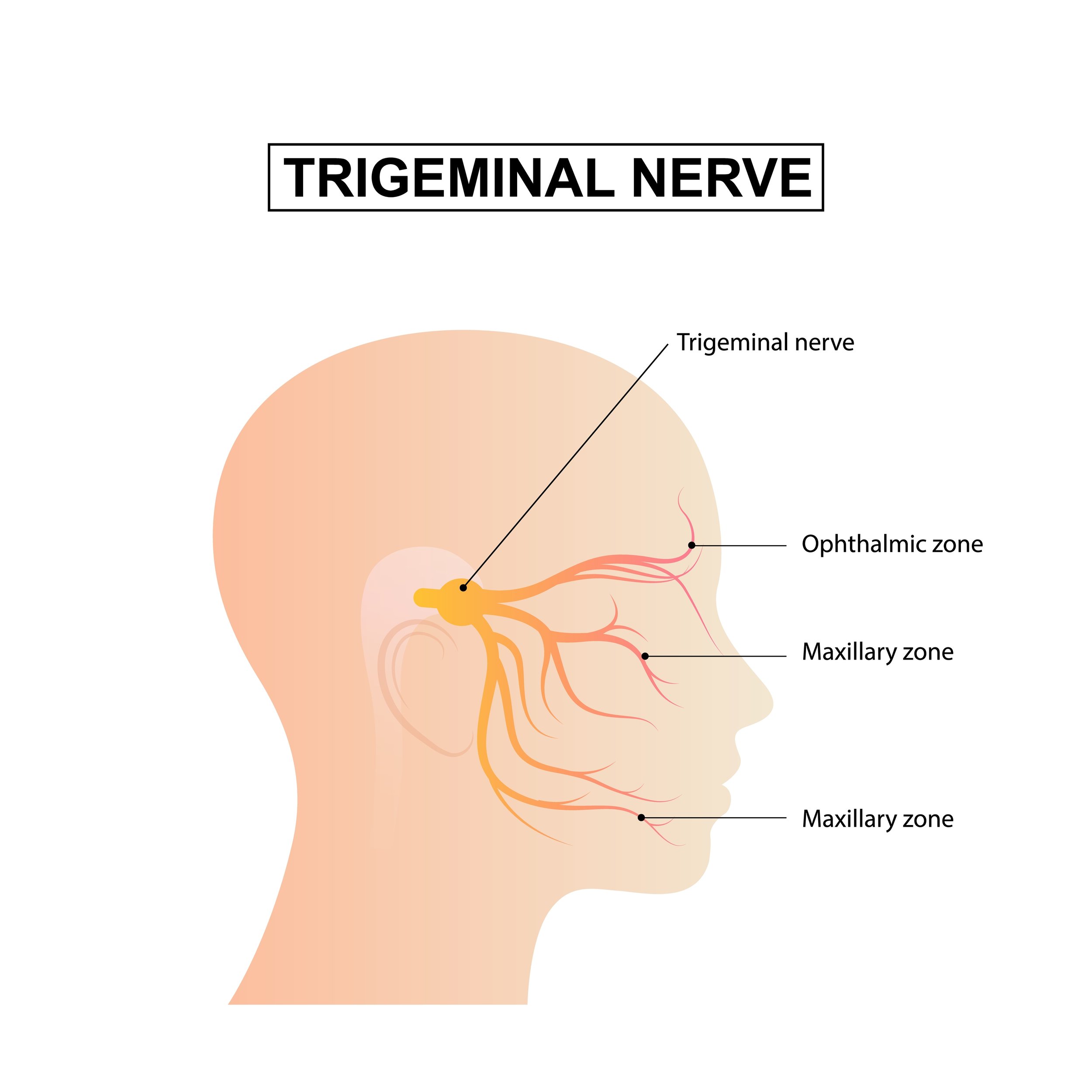
The trigeminal nerve has three major branches that carry sensory information from your forehead, cheeks, and jaw, making it the primary sensory nerve of your face.
That makes your feedback essential. If you begin tightening against my contact, holding your breath, or feeling uncomfortable, I may change the pressure, position, or pace. I want you to feel that you can communicate with me throughout the session rather than feeling that you need to tolerate a technique.
The vagus nerve plays a different role. It contributes to the regulation of functions such as heart rate and digestion through the autonomic nervous system, including its parasympathetic branch, often described as the “rest and digest” system.
My aim is to support physical ease while creating an opportunity for you to settle into the session. You may notice your breathing becoming more comfortable, your jaw resting differently, or simply becoming more aware of where you tend to hold tension.
These experiences can help guide our work, although they don't tell us precisely what an individual nerve is doing. I approach them as useful feedback about your experience, not as a diagnosis.
What These Additions Mean for Your Session
One theme from the workshop that stayed with me was patience: finding a comfortable direction, following the tissues, and allowing time before deciding what to do next.
Some of my muscle and fascial techniques may feel deeper or more specific. Others may feel like a gentle hold with very little pressure. There isn't one approach that works for everyone, so I choose and adjust these techniques based on your needs, your comfort, and what we observe together.
When a session includes intraoral work, I'll explain the approach beforehand, use gloves, and check in with you about your comfort. We can pause, modify the technique, or stop whenever you need. You always have a say in what happens during your session.
This training will inform all of my Jaw Release sessions. I'll also incorporate appropriate techniques into my Rolfing® Structural Integration and fascial integration sessions when they make sense for the person I'm working with.
Continuing my education allows me to build on the work I've already been doing while expanding the options available to my clients. It doesn't mean every session needs to include every technique. Instead, it gives me a broader understanding of the structures involved and more ways to adapt my approach.
Taking these classes has also helped me better understand the work of our practitioner, Carol. She specializes in focused CranioSacral Therapy sessions, combining structural work, attention to craniosacral rhythms, and energy work. I'm enjoying deepening my understanding of these approaches while continuing to develop the tools I use within my own structural practice.

Carol Seder
CMT, Craniosacral, Integrative Massage
Carol studied extensively at the School of Integrative Psycho-Structural Bodywork (IPSB) and the Life Energy Institute International (LEI), where she earned certifications in Massage Therapy, Craniosacral Therapy, Polarity Therapy, and Distant Healing Therapy.
Carol’s CranioSacral work is centered around gentle, attentive touch and listening to the subtle movements and responses of the body. Her approach creates a calm, supportive space where clients can slow down, release tension, and reconnect with their bodies.
Each session is thoughtfully tailored to the individual, allowing Carol to work with the body rather than forcing change. Through CranioSacral Therapy and her broader experience in therapeutic bodywork, she supports relaxation, ease, and the body’s natural capacity to find greater balance.
Looking for Jaw Release or CranioSacral work in Los Angeles?
If you've been experiencing jaw tension or are curious about how your jaw, head, and neck relate to one another, we’d love to explore that with you!
Our certified practitioners offer personalized Jaw Release and CranioSacral Therapy sessions, drawing on their training and experience to work with the muscles, fascia, and surrounding structures of the head and neck. Whether you're looking for focused jaw work or a gentler, hands-on approach to relaxation and overall comfort, we will help you find the approach that best suits your needs.
With locations in Playa Vista, Santa Monica, and Manhattan Beach, our experienced practitioners are here to help you better understand your body and experience the benefits of personalized, professional bodywork.
Frequently Asked Questions
1. What is Jaw Release therapy?
Jaw Release is a hands-on approach that focuses on the muscles, fascia, and surrounding structures involved in jaw movement and tension. Sessions may include work around the cheeks, temples, neck, and inside the mouth, depending on your needs and comfort.
2. How is CranioSacral Therapy different from Jaw Release?
Jaw Release typically focuses more directly on the jaw muscles and surrounding tissues, while CranioSacral Therapy uses gentle, light-touch techniques around the head, spine, and other areas of the body. Both approaches can be tailored to your individual needs.
3. Can Jaw Release help with TMJ discomfort?
Jaw Release may help reduce muscle tension and improve comfort and mobility for some people experiencing temporomandibular joint (TMJ) discomfort. Your practitioner will tailor the session to your needs, although results vary and persistent or severe symptoms may require evaluation by a qualified healthcare professional.
4. What should I expect during a Jaw Release or CranioSacral Therapy session?
Your session may include gentle or more targeted hands-on techniques, depending on the service and your goals. Your practitioner will explain the approach, check in about your comfort, and adjust the pressure and techniques as needed. Intraoral work is only performed with your informed consent.
5. Where can I receive Jaw Release and CranioSacral Therapy in Los Angeles?
Rolfing & Body Therapies offers personalized bodywork with certified practitioners at our Playa Vista, Santa Monica, and Manhattan Beach locations. Our practitioners can help you determine which approach may best suit your needs.
Quick Summary
Jaw Release: Focuses on the muscles, fascia, and surrounding structures involved in jaw movement and tension.
CranioSacral Therapy: Uses gentle, light-touch techniques to encourage relaxation and support physical comfort.
Individualized care: Techniques are adapted to your needs, comfort, and treatment goals.
Connected anatomy: Both approaches consider the relationships between the jaw, head, neck, and surrounding tissues.
