
What I Learned in CranioSacral Therapy 1 | By Natania Goldberg, Certified Rolfer® and Licensed Massage Therapist in Los Angeles

I recently traveled to New York City to complete CranioSacral Therapy 1 through the Upledger Institute. Although I have spent more than three decades studying the body and working with clients through Rolfing® Structural Integration, fascial bodywork, movement, and other manual therapy approaches, this course offered me a different way of listening to the body.
What surprised me most was how much information can be perceived, and how much change may occur, with an extraordinarily light touch.
What Is CranioSacral Therapy?
CranioSacral Therapy is a gentle, hands-on approach that uses approximately five grams of pressure, about the weight of a nickel, to listen to subtle motion and work with fascia and the membranes surrounding the brain and spinal cord. Sessions are typically performed with the client fully clothed.
Rather than forcefully manipulating the skull or spine, the intention is to support relaxation, mobility, and the body's self-regulating processes.
At Rolfing & Body Therapies, serving Los Angeles and Manhattan Beach, we view CranioSacral Therapy as one option within a broader integrative approach. It may be used on its own or coordinated with Rolfing® Structural Integration, fascial bodywork, massage therapy, movement education, physical therapy, acupuncture, or other appropriate care.
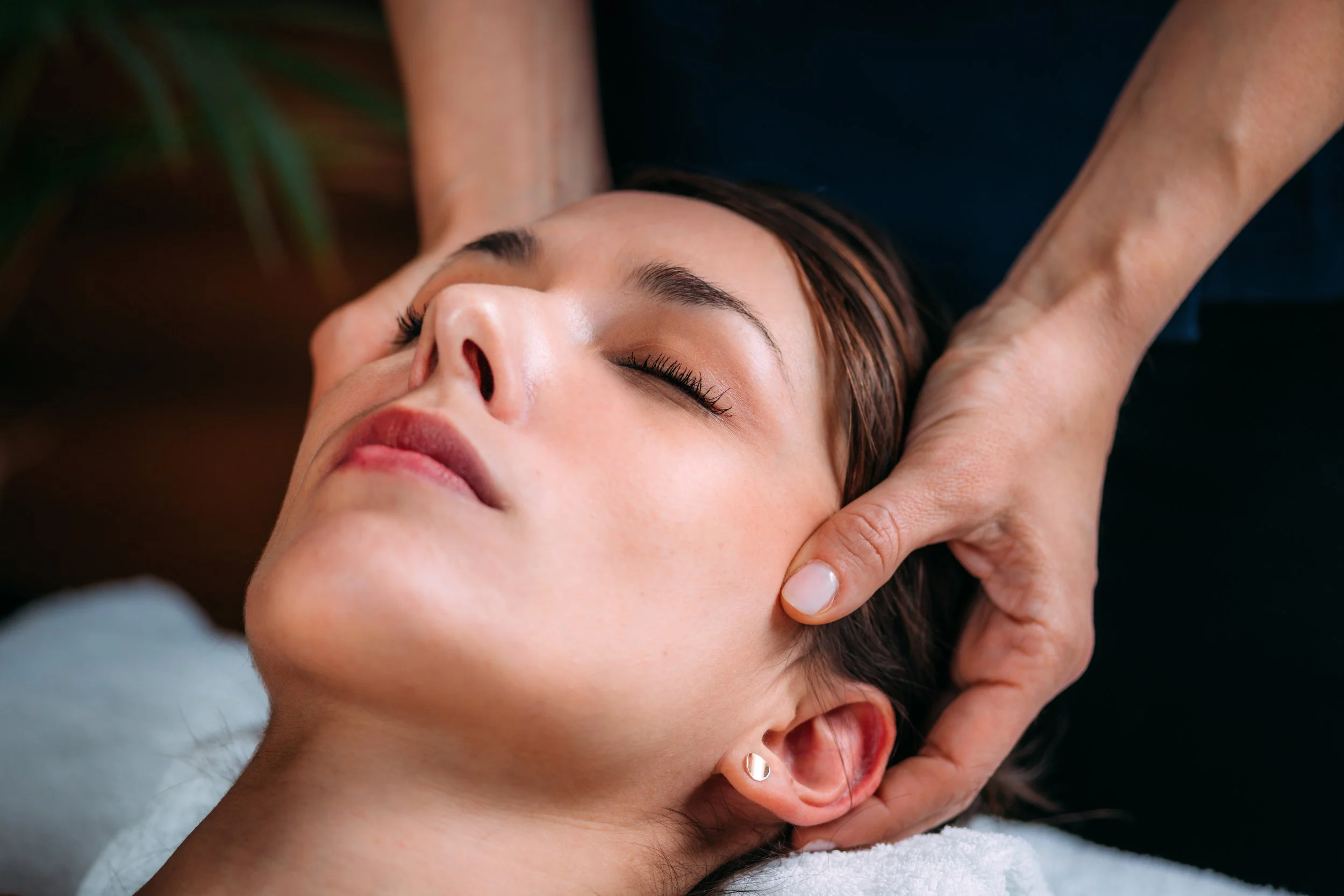
Did you know? CranioSacral Therapy developed from osteopathic medicine and grew from decades of hands-on exploration into how subtle movements within the body may be connected.
A Different Relationship With Pressure
In many forms of manual therapy, pressure is used to reach muscles, mobilize tissue, or engage restrictions. CranioSacral Therapy begins from a very different place.
One of the foundational principles I learned was to use the lightest amount of force necessary. Initially, five grams of pressure felt almost impossibly subtle. But as I became quieter and more attentive, I began to perceive delicate rhythms and motions that could easily be missed with greater pressure.
I could notice differences between the two sides of the body, areas that moved smoothly or felt restricted, changes in tissue texture and temperature, and small shifts as the body began to settle.
Sometimes the response appeared as softening or lengthening beneath my hands. At other times, it was reflected in a deeper breath, warmth, a quieter overall state, or a gentle change in movement.
It reinforced an important lesson:
Effective bodywork does not always require more force. Sometimes less pressure allows us to perceive more.
Listening Rather Than Forcing
One of the aspects of CranioSacral Therapy that resonated most deeply with me was the idea that the practitioner is not there to force the body into change.
Instead, we make contact, listen, and invite the tissues to move in the direction they are already attempting to go. The practitioner follows the body's response rather than imposing a predetermined outcome.
During the training, we practiced “listening stations” at the feet, legs, pelvis, ribs, shoulders, sacrum, and cranium. We observed the quality and symmetry of subtle motion and considered how restrictions in one area might influence tension or movement elsewhere.
This closely reflects how I already approach my work: the place where someone feels pain is not always where the underlying restriction began.
Understanding the Craniosacral System
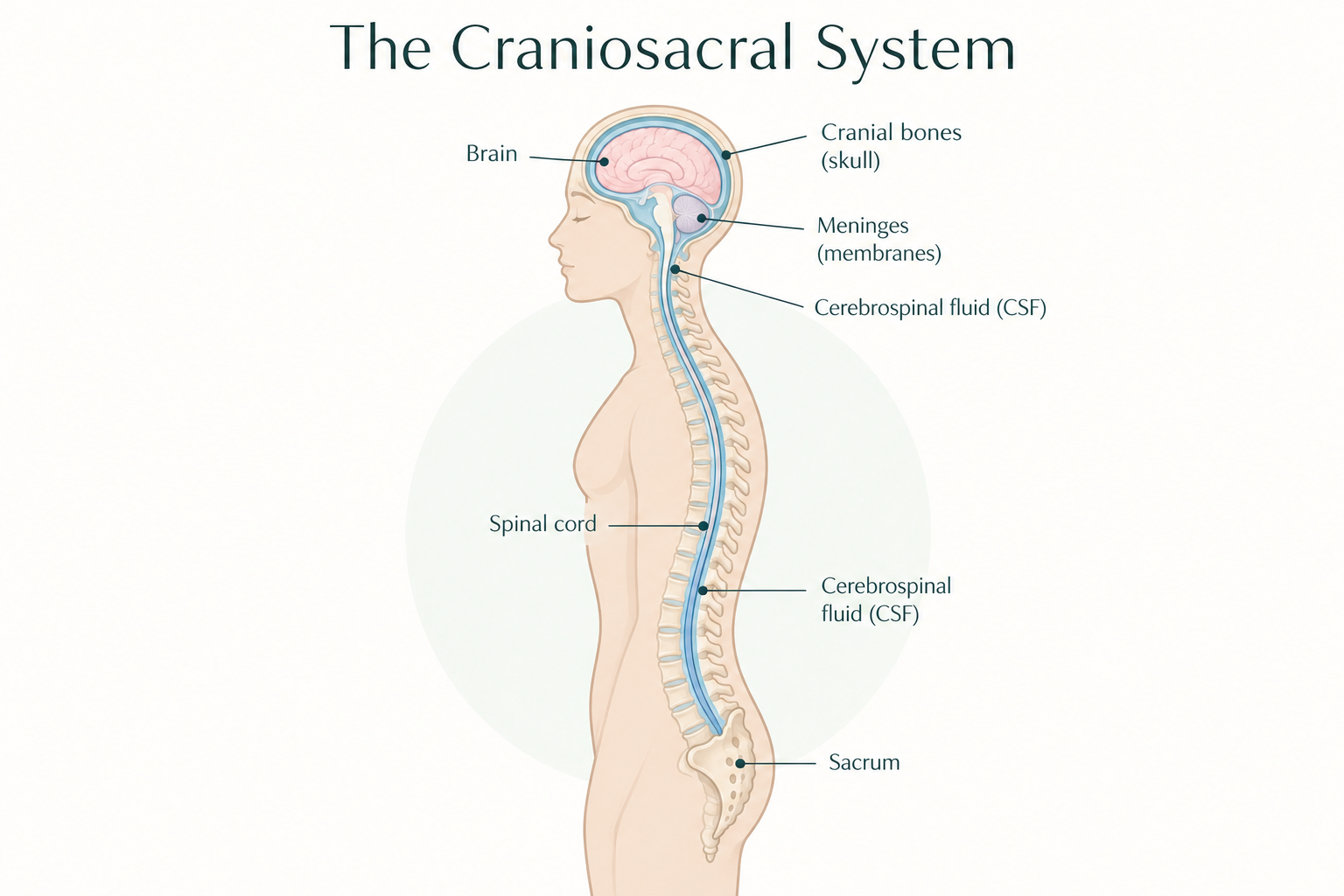
The craniosacral system includes the membranes and cerebrospinal fluid surrounding the brain and spinal cord, along with the structures that relate to them from the cranium to the sacrum.
The historical roots of this work reach back to osteopathy. Andrew Taylor Still founded the first school of osteopathy in 1892 and emphasized ideas that continue to influence integrative manual therapy, including the interconnectedness of the body, the relationship between structure and function, and the body's capacity for self-regulation.
In the early 1900s, osteopathic physician William Garner Sutherland developed the concept known as the Primary Respiratory Mechanism (PRM). Within traditional cranial osteopathy, the PRM describes a proposed subtle, involuntary motion involving the central nervous system, cerebrospinal fluid, intracranial membranes, cranial bones, and sacrum.
Dr. John E. Upledger later expanded this work. According to the Upledger Institute, his interest deepened after observing rhythmic movement in the membranes surrounding the spinal cord during surgery. From 1975 to 1983, he participated in multidisciplinary research at Michigan State University and eventually developed CranioSacral Therapy as a teachable whole-body approach using very light touch.
What resonated with me was the evolution of the work: observation led to questions, questions led to investigation, and the resulting approach asks the practitioner to remain curious rather than impose an answer on the body.
The Three Rhythms We Learn to Differentiate
One of the most fascinating parts of the training was learning to distinguish between three different rhythms that may be perceived through touch:
The cardiac pulse is the familiar heartbeat-driven pulse and is generally faster.
The respiratory rhythm follows breathing and can be particularly apparent around the ribs, shoulders, and abdomen.
The craniosacral rhythm, within the Upledger model, is described as a slower rhythm, commonly taught as approximately four to eight cycles per minute. It may be perceived as subtle widening and narrowing at the cranium and as external and internal rotation in paired structures elsewhere in the body.
The craniosacral rhythm is not something we try to create. We listen for it.
During the course, we assessed four qualities summarized by SQAR:
Symmetry: Do the two sides move together?
Quality: Does the movement feel smooth and coordinated?
Amplitude: How much motion is perceived?
Rate: How quickly does one cycle occur?
These observations provide a framework for deciding where to begin and reassessing how the quality of movement may change.
It is important to acknowledge that researchers continue to debate the biological source of a distinct craniosacral rhythm and how reliably different practitioners can palpate it. Some imaging studies have reported small rhythmic cranial movements, while palpation studies have found limited agreement between examiners.
I view the rhythm as one source of information within a broader assessment, not as a stand-alone diagnosis or substitute for medical evaluation.
Can Cranial Bones Move at the Sutures?
The adult skull is strong and protective, but it is made up of multiple bones connected by sutures. These include the frontal, parietal, temporal, occipital, and sphenoid bones.
These sutures are not loose joints, and CranioSacral Therapy does not attempt to move the skull through large or forceful manipulation.
Research has demonstrated that cranial tissues and sutures can deform by very small amounts under physiological forces, and some imaging studies have reported minute cranial motion. However, the size, source, and clinical significance of this movement remain subjects of scientific debate.
Within the Upledger approach, cranial bones are used as gentle contact points, or “handles,” for listening to the surrounding fascia and membranes.
This was another powerful lesson for me: the techniques are not about pushing bones into place. They are about meeting a structure with minimal pressure, waiting, and sensing whether the tissues underneath become softer, more fluid, or more coordinated.
Inside the 10-Step Protocol
The CranioSacral Therapy 1 training introduced a structured 10-step whole-body protocol. It provides a framework rather than a rigid recipe, allowing the practitioner to adapt according to the client's comfort and the body's response.
Listening and a still point: Assessing subtle motion and using a still-point technique to encourage quiet and relaxation.
Transverse diaphragms: Working gently with the pelvic diaphragm, respiratory diaphragm, thoracic inlet, hyoid region, and occipital base.
Sacrum and lumbosacral junction: Exploring the relationship between the sacrum, pelvis, and lower spine.
Dural tube: Using subtle traction, rocking, and gliding techniques along the pathway of the dura, the outer membrane surrounding the brain and spinal cord.
Frontal bone: Using gentle contact to work with the anterior cranial and membrane system.
Parietal bones: Exploring mobility around the parietal bones, sutures, and connected membranes.
Sphenoid: Assessing the centrally located sphenoid through subtle compression and decompression.
Temporal bones: Using gentle contact and ear traction while observing coordination between the two sides.
Temporomandibular joints: Addressing mobility around the jaw while considering its relationship with posture, breathing, stress, the neck, and surrounding structures.
Closing integration: Often concluding with another still point and allowing time to reassess the body's response.
Why Might Someone Explore CranioSacral Therapy?
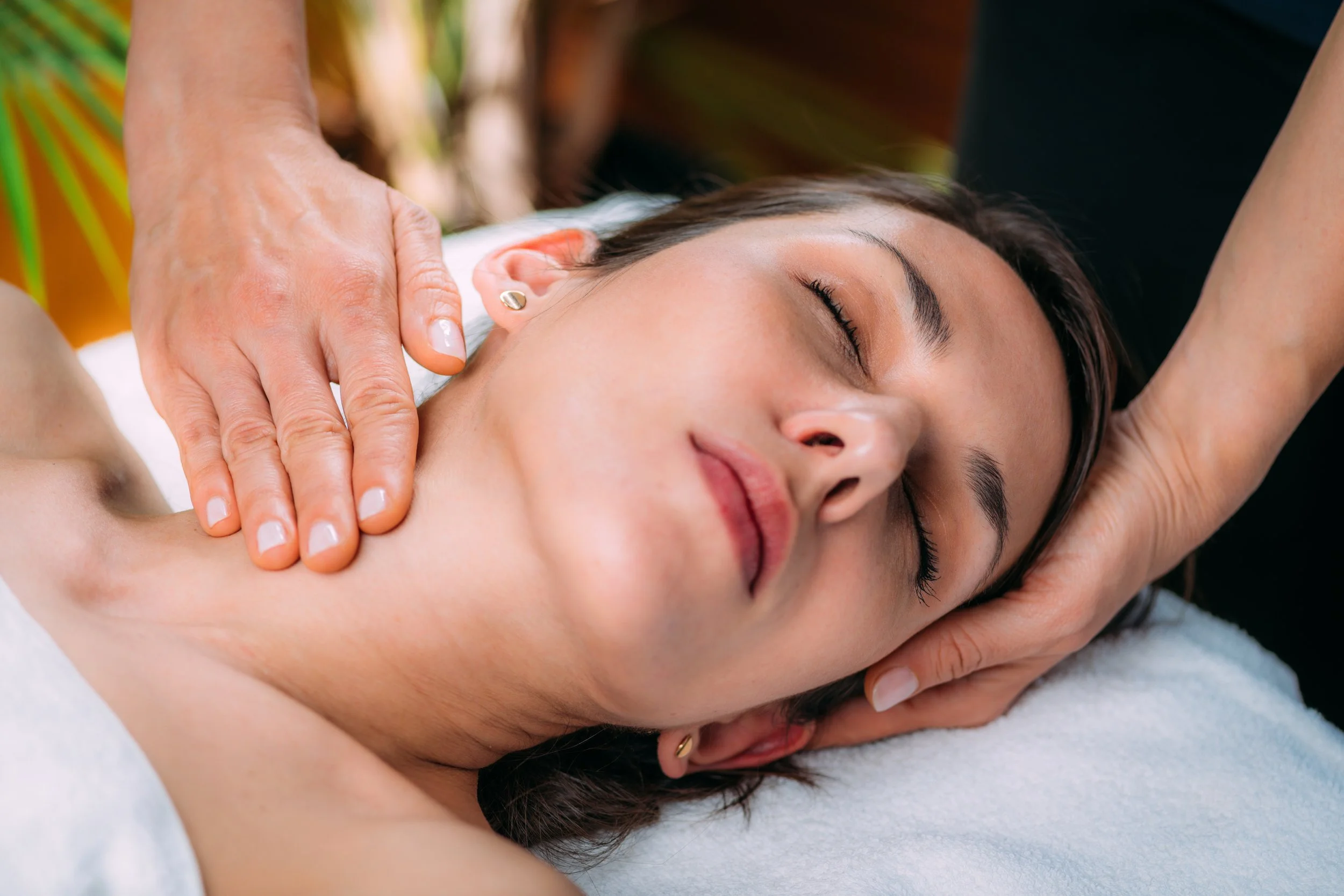
People may explore CranioSacral Therapy because they want a gentle, noninvasive approach or because stronger pressure does not feel appropriate for their body.
Potential goals may include:
Supporting relaxation and stress reduction
Supporting comfort with persistent neck or back tension
Addressing jaw tension or TMJ discomfort
Complementing care for headaches or other pain patterns
Supporting body awareness and a sense of regulation
Providing a gentler option for people who are sensitive or easily overstimulated
Complementing rehabilitation, movement work, or other healthcare when appropriate
The proposed rationale is that gentle, sustained contact may influence fascial mobility, sensory input, relaxation, and the way a person experiences tension or pain.
Some studies have reported improvements in pain and function for certain chronic pain populations, while other reviews have found the evidence limited or inconsistent. Results vary, and CranioSacral Therapy should be viewed as a complementary approach, not a replacement for medical care.
An Integrative View of the Body
One of the ideas that felt most familiar to me throughout the course was the interconnected nature of the body.
Fascia surrounds and connects muscles, bones, nerves, organs, blood vessels, and other tissues. When mobility changes in one region, the body may adapt elsewhere. A person experiencing jaw tension, headaches, neck discomfort, low-back tension, or restricted breathing may therefore benefit from an assessment that considers more than just the area where symptoms appear.
I do not see CranioSacral Therapy as a replacement for Rolfing®, fascial bodywork, massage therapy, movement education, physical therapy, acupuncture, or other forms of care.
I see it as another perspective and another set of tools that can help inform an individualized approach.
Learning Through Collaboration
We are fortunate to have Carol on our team, whose work specializes in CranioSacral Therapy. Completing this training has given me a deeper understanding of the principles behind her work and strengthened our ability to communicate and collaborate when determining which approach may be most appropriate for a client.
The body is complex. Sometimes looking at it from multiple perspectives gives us a better understanding of how to support the person in front of us.
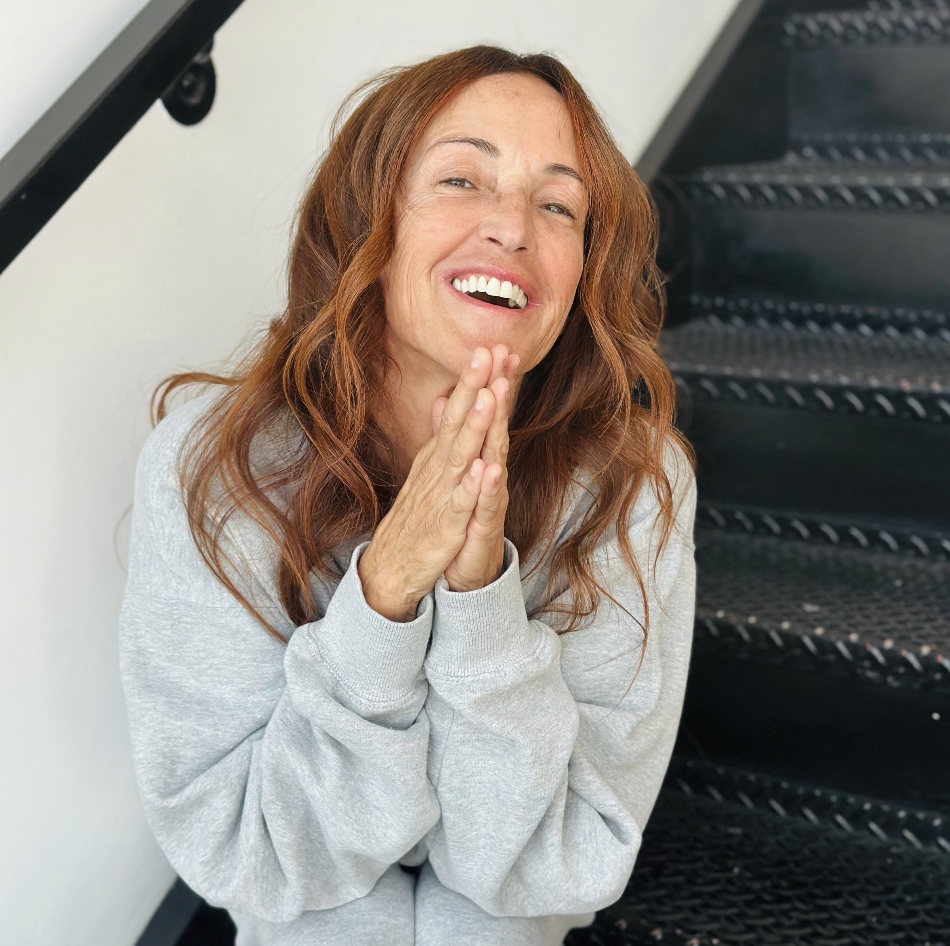
Carol Seder
CMT, Craniosacral, Integrative Massage
Carol studied extensively at the School of Integrative Psycho-Structural Bodywork (IPSB) and the Life Energy Institute International (LEI), where she earned certifications in Massage Therapy, Craniosacral Therapy, Polarity Therapy, and Distant Healing Therapy.
Carol’s CranioSacral work is centered around gentle, attentive touch and listening to the subtle movements and responses of the body. Her approach creates a calm, supportive space where clients can slow down, release tension, and reconnect with their bodies.
Each session is thoughtfully tailored to the individual, allowing Carol to work with the body rather than forcing change. Through CranioSacral Therapy and her broader experience in therapeutic bodywork, she supports relaxation, ease, and the body’s natural capacity to find greater balance.
Looking for CranioSacral Therapy in Los Angeles?
If you’re looking for a gentle, hands-on approach to help you slow down, release tension, and reconnect with your body, CranioSacral Therapy may be a wonderful option to explore.
At Rolfing & Body Therapies, our CMT certified practioner, Carol, offers Craniosacral therapy at our Playa Vista, Santa Monica, and Manhattan Beach locations. Whether you’re exploring CranioSacral Therapy on its own or looking for an approach that complements other forms of bodywork, we’re here to help you find what feels appropriate for your body and your needs.
Frequently Asked Questions
Q: What does CranioSacral Therapy feel like?
A: The contact is extremely light and sustained. A person may notice warmth, softening, a deeper breath, small movements, or simply a sense of becoming more settled. Everyone experiences the work differently.
Q: Do I remain clothed?
A: Yes. CranioSacral Therapy is generally performed with the client fully clothed on a treatment table. Comfortable clothing is best.
Q: How is it different from massage or Rolfing®?
A: Massage and Rolfing® may use more direct pressure to work with muscles, fascia, posture, and movement. CranioSacral Therapy generally uses much lighter contact with an emphasis on listening to subtle movement and tissue responses.
Q: Does it replace medical care?
A: No. CranioSacral Therapy is a complementary manual-therapy approach and should not replace necessary medical evaluation or treatment.
Q: Who provides CranioSacral Therapy at Rolfing & Body Therapies?
A: Carol is our in-house practitioner specializing in CranioSacral Therapy. I have completed CranioSacral Therapy 1 as part of my continuing education, expanding my understanding of the approach and our ability to collaborate as a team.
Quick Summary
CranioSacral Therapy uses extremely light touch to listen to subtle movement and tissue responses.
The approach emphasizes listening rather than forcing change, allowing the body to respond at its own pace.
The craniosacral system connects the brain, spinal cord, membranes, cerebrospinal fluid, cranium, and sacrum.
Training includes learning to distinguish the cardiac, respiratory, and craniosacral rhythms.
The 10-step protocol provides a whole-body framework that can be adapted to each individual.
CranioSacral Therapy may support relaxation, body awareness, nervous system regulation, and comfort with areas of tension.
It can be used as part of a broader integrative approach alongside Rolfing®, massage, acupuncture, physical therapy, and other care.
Most importantly, the training gave Natania a renewed appreciation for the power of subtlety and attentive touch.
